Monday, October 10, 2016

Background for John Jay Christmas Address 1776

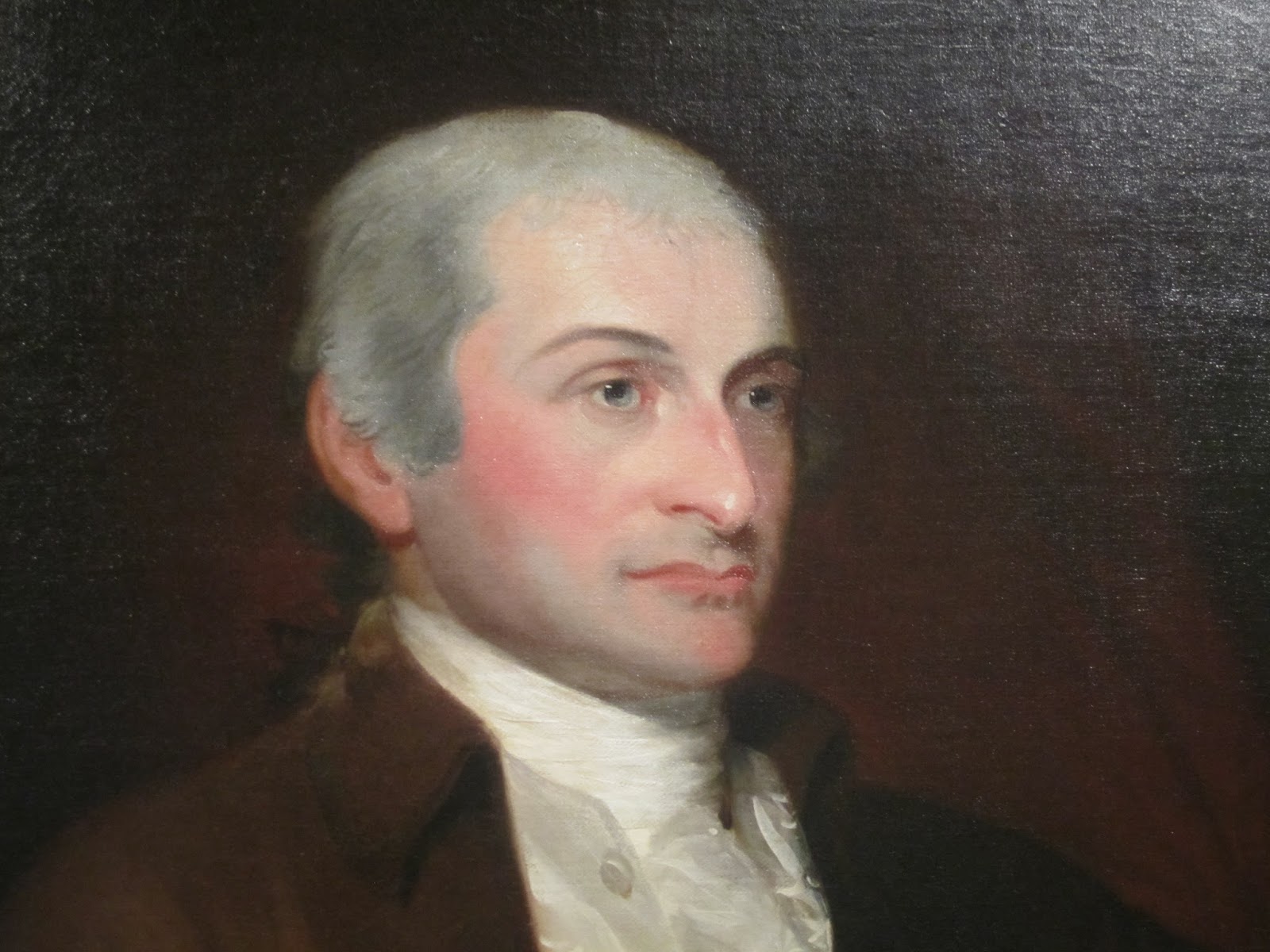
Why John Jay Had to Stay: New York Christmas Address 1776 The year 1776 turned out to be more than a tough year for the state and City of New York, it was disastrous. If you did not realize it before you will see why John Jay had to stay in New York. As of June 1776 there were two British warships in New York harbor and New Yorkers were anticipating the arrival any day of the British Fleet. As advertised, the fleet came and showed off its power and intimidated the citizens. Let us look at the multiplied defeats in the New York Theater of operations.
The Battle of Brooklyn could have ended the American Revolution. Our army was almost totally destroyed; almost. The Americans were outnumbered (15,000 to 20,000 or 30,000), outclassed, outgunned and out strategized. We were no match for the British Fleet. General Howe outflanked us and had the Continental Army facing two fronts. The Maryland Line served with honor; 256 Marylanders gave up their lives so that the rest of the Continental Army could escape. A huge storm came up which delayed the British advance. In an amazing feat, Washington retreated across the East River. The dawn came accompanied with a fog that did not lift until Washington left on the last boat. I highly recommend David McCullough’s illustrated version of 1776 about the battle of Brooklyn.
After the Brooklyn defeat, another battle was fought at Kip’s Bay. We lost that battle also. The British rubbed it in by sounding fox hunt music. After Kip’s Bay, the British beat us again at Harlem but we put up a good fight. We lost Fort Lee and then Fort Washington. The loss of life and the number of prisoners lost to the British staggered the resolve of the Patriots. On top of all the losses, New York suffered with the great fire in September. Defeat after hard defeat gives us the context for the New York Convention asking John Jay to write something to enliven the spirits of New Yorkers. He wrote what I have entitled “The New York Christmas Address of 1776” or “John Jay’s 1776 Christmas Address.” What was John Jay doing all this time? Most of us do not think of John Jay on horseback. He travelled over 250 miles on horseback from Fort Montgomery (nine miles south of West Point) to Salisbury, Connecticut ( a trip of about 70 miles) trying to secure cannons. Being unsuccessful, he went another 75 miles to Lebanon, Connecticut where he got 10 twelve pound and 10 six pound cannons. He took them to Poughkeepsie and travelled to Livingston Manor. In the midst of all this, John Jay is a young guy that just got married to Sally Jay in 1775. His wife Sally gave birth to a son named Peter in January 1776. Sally became ill around this time and Jay had to pick her up at Elizabeth, New Jersey and took her to supposed safety in Fishkill, New York. Once he got her settled, Jay went to Rye, New York and brought his parents to Fishkill also. If you were a New Yorker during this time, things were lower than glum, they were desperate. Knowing his despondent audience, Jay wrote his address to give hope to suffering New Yorkers. To see a reading of the address go to

Sunday, October 9, 2016

John Jay Prayer Proclamation May 26, 1779

Proclamation of Continental Congress May 26, 1779 John Jay President [Raising Battalions by Appealing to the Supreme Ruler] By the Congress of the United States of America A Proclamation The circumstances attending the violation of the rights of America, by Great Britain, and the events of the present war in consequence of that violation, have manifested, that the supreme ruler of Heaven and earth, led these United States out of bondage; and that it is he who hath made them Independent. A situation in which only, they can be secure against their enemies; and from which mankind can receive those blessings, which, the great father of all, hath designed they should enjoy from the civilization of this new world. The United efforts of these states under the favor of heaven have hitherto rendered vain, the mighty exertions against them by the King of Great Britain, by arms; and have frustrated the destructive designs of that prince, by negotiations. Happily the United States by experience know, that such efforts are capable of securing them against his power; and that their duty to God, to themselves, to their posterity, and to mankind, impels them to exert those efforts to the utmost of their ability. The present season for military operations, furnishes them with an opportunity of discharging this duty. The smiles of their creator upon their past actions, furnishes them with an opportunity of discharging this great duty. The smiles of their creator upon their past actions must inspire them with religious confidence in their future exertions; the hardships they have suffered, enable them to encounter new difficulties; and their great ally regarding their Cause as his own, and taking part in the war, must warm their affections, excite their emulation, and invigorate their proceedings. May 26, 1779 The President [John Jay] The Continental Congress, with John Jay as its President, saw that the way of getting the states to raise battalions was to appeal to the supreme ruler of Heaven and earth who led the United States out of bondage.

John Jay and Spying

People are asking about the authenticity of the AMC program “Turn” on Sunday nights. I have been watching with interest because John Jay was quite involved in the spy network in and around New York. His work with Enoch Crosby served as the basis for a book entitled “The Spy” by James Fennimore Cooper (who was a friend of John Jay’s son). Jay served on the Secret Committee of the New York Convention (Vol. I, p.75). On July 22, 1776, Jay purchased a cannon from Salisbury, Connecticut. Robert Morris’ September 23rd letter to Jay speaks of invisible ink used in letters (I, 84). Jay served on the Secret Committee whose purpose was “for inquiring into, detecting, and defeating all conspiracies which may be formed in this State against the liberties of America.” (I, 90). In Continental Congress, on November 29, 1775 a group was formed named the Secret Committee consisting of Benjamin Harrison, Benjamin Franklin, Thomas Johnson [Maryland], John Dickinson and John Jay. During the first part of the war, Jay also served as Chief Justice of the State of New York. “I am now engaged in the most disagreeable part of my duty, trying criminals. Roberries become frequent: the woods afford them shelter, and the tories food.” (I, 179) After serving as President of Continental Congress, Jay was commissioned as Minister Plenipotentiary to Spain to try to get them to join the United States against Great Britain. Jay’s letters were continually checked by both the Spanish and French authorities. He asked that Congress would send him six letters in hope that one would get through. Following is a cipher code from Jay to Robert Morris on November 19, 1780 (I, 446): “Should the following cipher reach you safe, we may afterward write with less reserve. Entick’s Spelling Dictionary, printed in 1777 [it pains a Webster to mention any other dictionary], paged backwards. The last page in the book is numbered 468. Let this be page the first, and mark the page (which is the title page) 468. Count the words from the top, distinguishing the columns by a [.] over the first figure for the first column, and a [.] over the second figure for the second column. For instance, the word absent is the fifth word in the first column of the 434th page, and is to be written: 5,434.”

Sally Jay's Contribution to the Paris Peace Treaty

Sally Jay's Contribution to the Paris Peace Treaty Sally Jay’s Impact on the Treaty of Paris 1783 Not much historical thought is given to Sally (Sarah) Jay. Not much focus is put upon her travel with her husband to Spain and then to France in the middle of the American Revolutionary War. Let us turn our focus on her huge impact on the negotiations of the Treaty of Paris 1783. If Sally Jay did not accompany her husband to Spain and then France, we might not have gotten a peace treaty.
The daughter of William Livingston came to become the wife of John Jay. It was difficult being newly married in April, 1774. She gave birth to Peter in January 1776. With New York in British hands she moved to different places during 1775-1779. (Elizabethtown, New Jersey; Fishkill, New York; Rye New York) Mrs. John Jay would have been a sought after target for the British and Tories. In one sense making the Atlantic crossing was not all that daunting for her, she was used to it. The British were after the Jays on land or on sea. If she was caught on a ship it would have probably been the Tower of London. If she was caught in New York or New Jersey there would have been equal difficulties.
The Jays left Chester Pennsylvania on October 1779. Her husband John has been President of Continental Congress the past year (1778) in Philadelphia and has now been sent to Spain as Minister Plenipotentiary to try to get Spain to officially recognize the United States and give us financial aid. The ship Confederacy gets hit by a fortnight storm (10-14 days) where the masts break and the rudder is damaged. One can imagine the sea-sicknesses and tendency of people to be down mentally in such conditions. Sally wrote to her mother when they finally limped into the island of Martinique. She said that John's characteristics shone like a diamond throughout the extended storm. I must add that she had similar qualities to not loose her head in such conditions. The French ship Aurora allowed them to go to Cadiz, Spain (they were pursued by a British ship). In rough lodging sometimes, the Jays made their way to Madrid eventually. On one instance the coach carrying them turned over. The Spanish did not want to recognize the United States and John kept going back and forth from Madrid to Aranjuez. Sally gave birth to Susan on July 9,1780. Susan died one month later. Sally could have been a basket case but in spite of her grief, she moved on. Her faith in God sustained her in these trials. Maria was born in Madrid on February 20, 1782. Franklin and Adams saw the futility of the Spanish negotiations and saw the need of assistance in Paris. They asked John to come join them so John and Sally travelled on May 21 to northern Spain, took a ship in the Bay of Biscay to Bayonne and from there to Paris and arrived there June 23 1782. In July 1783, the Jays moved in with Ben Franklin at Passy. Franklin became ill with severe kidney stones and Adams was away in Holland trying to secure loans from them. The lion share of the negotiations fell on John Jay. Adams later wrote that the French called Jay “le Washington of the negotiation.”
Getting back to Sally, she was the glue that held Jay together and made others feel welcome. A lot of the negotiations took place in the Jay’s hotel room at Hotel d’Orleans on rue Bonaparte. Having two very young children had an effect on the negotiators. Franklin in his later correspondence with Jay would always ask how Maria (18 months old) was doing. Maria made a bridge between Jay and Franklin. The time that Franklin spent with the Jays may have had an impact on Franklin. Franklin had quite a following in France; he might be called the Bill Gates of his day (and maybe even more so). He had a reputation of being a ladies’ man in France but his time with the Jays may have brought him back to reality. It could be a piece of the link that makes Franklin into the man that challenges the Constitutional Convention to remember the reason why they were not making any headway in the deliberations. Franklin told the Constitutional Convention that the reason why their deliberations did not get anywhere is because they did not commit the proceedings to prayer and allowing the God who causes empires to rise and fall to direct them. Sally and Maria were also good for John Adams when he visited. Walter Stahr (in his book "John Jay: Forgotten Founder") on page 164 relates how Adams said that the three men lived together in perfect good humor. Sally and Maria helped make “the perfect good humor.” These men individually might have been sticks in the mud on specific points of negotiation but Sally and Maria were in charge of the perfect good humor. I dare say that the negotiations might have gone differently if not for the presence of Sally and Maria Jay.

John Jay on Freedom of Religion

John Jay on Freedom of Religion

What Would John Jay Say About the Current Supreme Court?

What Would John Jay Say About the Current Supreme Court? People ask me quite often:”What would John Jay and the Founders think about the Supreme Court?” For starters he would be livid that the Supreme Court consisted of zero ( 0 ) Evangelical Christians. There are ZERO Evangelical Protestants on the Supreme Court Not even one? It is great that there are Catholic and Jewish Supreme Court justices but there is no room in the Supreme Court Inn for Evangelical Protestants. The tolerant, multi-cultural group will cut down your legs if you happen to be a WASP (How is that tolerant?). Most modern day citizens of the United States have no clue that the first Chief Justice of the United States also served as President of the American Bible Society. Most modern day citizens of the United States have no clue that the first Chief Justice of the United States also served as President of the American Bible Society.

Thursday, June 9, 2016

Frederick Douglass on John Jay

John Jay had two sons, Peter (born 1776) and William (born 1789). One was born on the year that the United States declared its independence and the second on year that the infant government took shape in New York City. While researching on William Jay, I came across a profound eulogy delivered by Frederick Douglass in May,1859 at . When I read what Douglass wrote about John Jay, it brought me to tears. I recommend Douglass’ whole eulogy available at https://www.loc.gov/item/mfd.21041/
However, I want to bring to you what Frederick Douglass specifically said about John Jay:
Mr. Jay was born in New York, on the 16th of June, 1789, and died at his home in Westchester county, on the 14th of October, 1858, having nearly filled up the scriptural measure of human life. He was the second son of JOHN JAY- a man whose name and fame stand worthily connected with those of GEORGE WASHINGTON. The father of our deceased friend was one of the most eminent men of his day, and ranked with such as Hancock, Adams, Hamilton, Jefferson and Franklin- the most renowned of all the American patriots. The history of JOHN JAY is in fact the history of the American Revolution, and of American Independence; as indeed, it is also the history of Emancipation in this State [New York]. For the father, not less than the son, was an Abolitionist. Abolitionism seems hereditary in the family- from father to son and grand-son. In the darkest hours, and the deepest perils, which surrounded the American cause, and they were far numerous and direful than many at this day suppose, JOHN JAY never wavered, JOHN JAY never doubted. It is indeed, hard to say, in view of the slender margin between success and failure in that great undertaking, how the Revolution would have ended, whether independence itself would have been achieved had it lacked the support of JOHN JAY [emphasis mine].Certain it is , that to his devotion, vigor, sagacity, address, unflagging industry and determination, the American people are to-day largely indebted for their freedom and independence. He served his country as few had the ability to serve it. His singular purity of character shed light and gave strength to the revolutionary cause.
At home and abroad, by his talents, by his learning, by his voice, and by his pen, in council, in the field; as a member of Congress, as a foreign minister, as Chief Justice of the United States, both before and after the Revolution, JOHN JAY won for himself a high place among the Patriots of the Revolution. William Jay was fortunate in being the son of such a father. A man so faithful to the impulses of true liberty, animated by the loftiest patriotism, was just the man to be scrupulously concerned for the proper education of his children; for the love of family and love of country go hand in hand together. Ambition may, indeed, sometimes mask itself in the forms of patriotism- but the genuine sentiment springs up its fullness and purity only at the fire-side.” [the large capital letters come from Frederick Douglass] LikeFrederick Douglass' Description of John JayCommentShareShare Frederick Douglass' Description of John Jay